 Georgetown Golf Cart Repair
 Golf Cart Brake & Tire Service in Georgetown, Texas
Golf cart brake work in Georgetown runs $75 for an adjustment, $100–$250 for shoes and drums, and $200–$400 for a full overhaul; tires run $75–$150 each installed ($300–$600 a set), including the turf tires Sun City Texas requires on its courses. All of it happens at your home: the tech brings the parts, does the work in the driveway, and the $50–$100 service call is applied to the repair.
Brakes and tires are the unglamorous half of cart ownership, and the half that actually determines whether the cart is safe. Here’s what wears, why it wears faster here, and what fixing it costs.
Why Georgetown carts eat brakes and tires
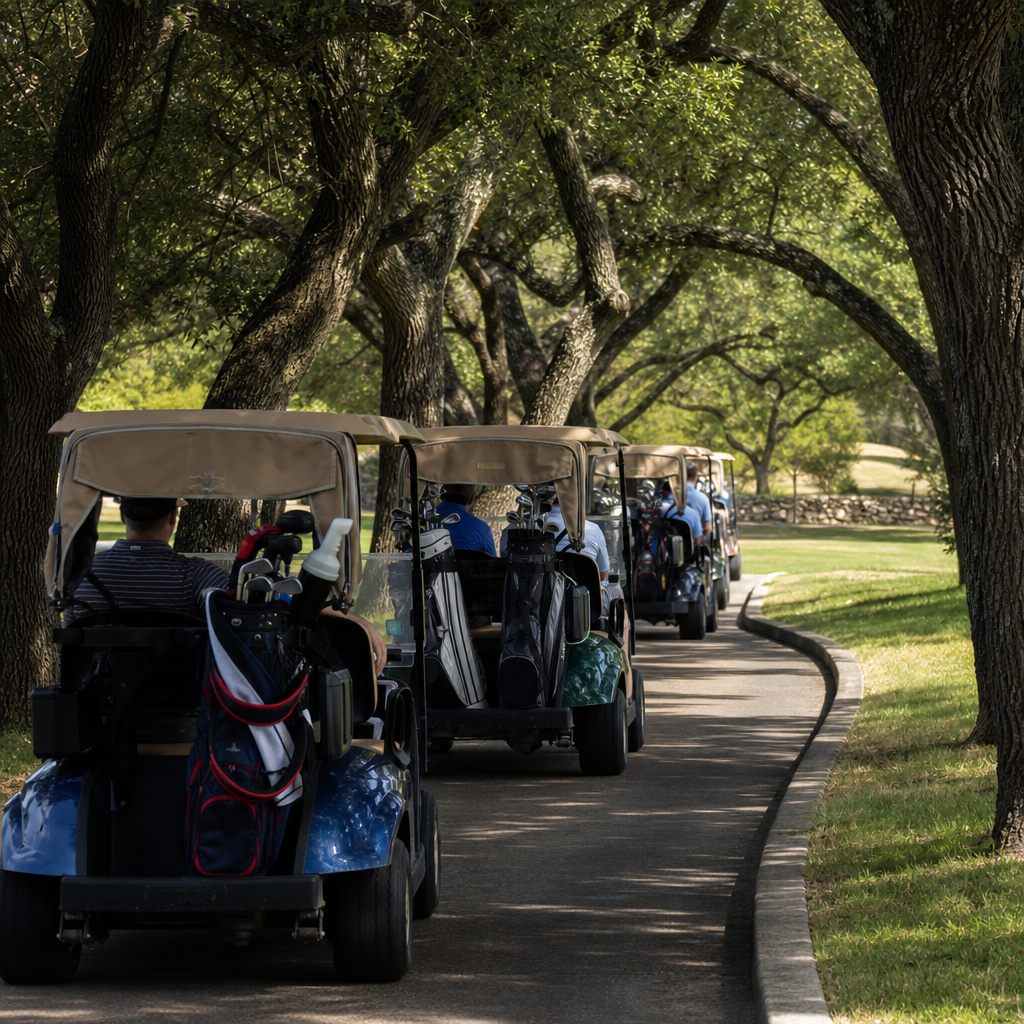
A course-only cart brakes gently a few dozen times a round, on grass, on weekends. A Sun City Texas cart is a different machine entirely: it’s daily transportation on paved internal streets, stopping at intersections, easing down the grades around the Cowan Creek side, hauling two people and groceries from the shopping-area cart parking. Pavement multiplies brake use and tire wear; daily mileage multiplies everything. The community’s own design guarantees it, carts are street-legal on the internal roads and every amenity center has cart parking, so residents genuinely drive these things like cars.
The Texas climate adds its own tax. Summer pavement heat and UV crack tire sidewalls from the outside while age hardens the rubber from the inside; carts parked in the same spot for a hot month develop flat spots; and brake components in a dusty, 100°+ cart garage gather the grit that glazes shoes and seizes cables. Wolf Ranch and Parkside families running carts to the amenity center see the same wear pattern on a slower clock.
Brakes: what actually goes wrong
Most golf carts (Club Car, E-Z-GO, Yamaha, and the newer ICON and Evolution carts alike) use mechanical drum brakes on the rear wheels, actuated by cables. Simple, robust, and utterly dependent on adjustment. The common complaints and what they usually mean:
- Squealing or grinding: glazed or worn shoes, or dust in the drums. Starts as a $75 adjustment; left alone, becomes a $100–$250 shoe-and-drum job; ignored long enough, grinds the drums into a $200–$400 overhaul.
- Long, soft pedal: stretched or misadjusted cables. Almost always adjustment.
- Pulling to one side: uneven adjustment or one dragging shoe.
- Cart rolls on a slope with the pedal locked: worn shoes or a failing parking-brake mechanism. On a community with real grade changes, this is the one to take seriously today.
- Pedal feels fine but stops keep getting longer: the slow fade owners adapt to without noticing. This is exactly what the brake check in every tune-up exists to catch.
Our brake sequence on-site: test drive first, then wheels off, drums inspected, shoes measured, cables checked for stretch and seizure, hardware inspected, then the honest quote, adjustment if adjustment solves it, parts only when parts are worn. Nobody gets sold an overhaul for a squeak.
Tires: turf, street, and the Sun City rule
The tire on your cart should match the cart’s actual life:
- Turf tires: the smooth-shouldered, course-friendly tread. Non-negotiable if you play Sun City’s courses: the community requires course carts to be registered with the association, carry their assigned ID number, and run turf tires, with personal carts conforming to the posted specs. We stock common turf sizes and keep your cart course-legal without you hauling it anywhere.
- Street/all-terrain tread: better grip and wear on pavement for carts that never see a fairway, common in Georgetown’s newer neighborhoods.
- Lifted and low-profile setups: the custom end of the market, $150+ per tire; we install these too, quoted by size.
Replacement runs $75–$150 per tire installed, $300–$600 for a set of four, mounted and balanced at your home. When we’re there, we also check what tires quietly reveal: uneven wear that points to bent spindles or alignment issues, and slow leaks at aging valve stems.
When to replace: under ~2/32” of tread, any sidewall cracking (Texas sun makes this the most common terminal condition here, an old cracked tire with plenty of tread is still a failed tire), repeated slow leaks, or flat-spotting that thumps at speed.
Street-legal equipment, while we’re there
Texas law allows golf carts on qualifying public streets posted 35 mph or less, including inside master-planned communities (no plate needed there). On streets a city opens to carts it generally takes a golf cart plate from the county tax office (Williamson County’s is at 1848 Texas Trail in Georgetown) and required equipment: headlamps, taillamps, reflectors, mirrors, and a parking brake. Two of those five are literally this page’s job. If you’re setting a cart up for street use in Georgetown proper, we’ll service the parking brake, install lighting, and tell you plainly what the cart still lacks, no legal advice, just a straight equipment rundown against the state list.
Same-visit, at your home
Brake shoes, hardware, and common tire sizes ride on the truck, so most brake-and-tire calls in Georgetown, Sun City, Leander, Cedar Park, and Round Rock finish in one visit. Booking tip: tell us the symptom and the tire size or cart model, and the right rubber makes the trip. While the wheels are off, a quick battery-terminal and cable glance costs you nothing, if we spot the early signs of a pack on its way out or a charger cooking itself, you’ll hear about it with numbers, not pressure.
Prices for everything on this page are published on the pricing page. We’re an independent local service, not a dealer for any brand, and the quote you approve in the driveway is the price you pay.
Get a quote: cart brand, the symptom (squeal, pull, long pedal, worn tires), and tire size if you know it. Same-day and next-day windows across the Georgetown area most of the year.
Frequently Asked Questions
How much does golf cart brake repair cost?
A brake adjustment runs about $75 and fixes most early squeals and long-pedal complaints. Shoes and drums run $100–$250, and a full overhaul (shoes, drums, hardware, cables) runs $200–$400, all done at your home with the service call credited toward the work.
What tires does Sun City Texas require for the golf courses?
Carts used on Sun City's courses must run turf tires (and be registered with the community association with their assigned ID number). We stock common turf sizes and install at your home, so your cart stays course-legal without a trip anywhere.
How long do golf cart tires last?
For a daily-driven Sun City cart, roughly 4–7 years: flat-spotting from summer parking, sidewall cracking from heat and UV, and plain tread wear are the usual ends. Cracked sidewalls on an aging tire are a replace-now item even with tread left.
My cart pulls to one side when I brake. What is it?
Usually uneven brake adjustment or one dragging/glazed shoe, occasionally a seized cable. It's diagnosable in minutes on-site and most often lands in the $75 adjustment or $100–$250 shoe range rather than anything scary.
Can you make my cart's brakes and lights street-ready?
Yes. Where a city allows golf carts on its public streets (35 mph or less), Texas requires equipment including headlamps, taillamps, reflectors, mirrors, and a parking brake. We service the parking brake and install lighting kits on-site, and we'll tell you plainly what your cart has and lacks.
More golfcart services
- Mobile Golf Cart Repair: Fixed in Your Driveway, Georgetown TX
- Golf Cart Battery Replacement in Georgetown & Sun City Texas
- Golf Cart Motor, Controller & Solenoid Repair in Georgetown
- Golf Cart Charger Repair in Georgetown: Test First, Then Fix
- Golf Cart Tune-Up & Annual Service in Georgetown, Texas
- Golf Cart Speed & Controller Programming in Georgetown
- Golf Cart Lights & 12V Accessories in Georgetown
Areas we serve
- Georgetown, TX
- Golf Cart Repair in Sun City Texas: At Your Cart Garage
- Mobile Golf Cart Repair in Cedar Park, Texas
- Mobile Golf Cart Repair in Hutto, TX
- Mobile Golf Cart Repair in Jarrell, TX
- Mobile Golf Cart Repair in Leander, Texas
- Mobile Golf Cart Repair in Liberty Hill, TX
- Mobile Golf Cart Repair in North Austin
- Mobile Golf Cart Repair in Round Rock, Texas